<museum2.htm> [Use Landscape
orientation to print] Comprehensive Account <Navigate to COMMUNITY
INSTRUCTION>
HISTORY
OF BIOLOGICAL PEST CONTROL
Dr. E. F. Legner, University of California, Riverside (Contacts) The
recorded history of biological control may be considered as dating from
Egyptian records of around 2,000 BCE, where domestic cats were depicted as
useful in rodent control. Insect Predation was recognized
at an early date, but the significance of entomophagy and exploitation was
lost except for a few early human populations in Asia where a sophisticated
agriculture had developed. The
Chinese citrus growers placed nests of predaceous ants, Oncophylla smaradina,
in trees where the ants fed on foliage-feeding insects. Bamboo bridges were constructed to assist
the ants in their movements from tree to tree. Date growers in Yemen went to North Africa to collect colonies
of predaceous ants which they colonized in date groves to control various
pests. Insect Parasitoidism was not
recognized until the turn of the 17th Century. The first record is attributed to the Italian, Aldrovandi
(1602). He observed the cocoons of Apanteles glomeratus being attached to larvae of Pieris rapae (the imported cabbageworm). He incorrectly thought that the cocoons
were insect eggs. Printed
illustrations of parasitoids are found in Metamorphosis
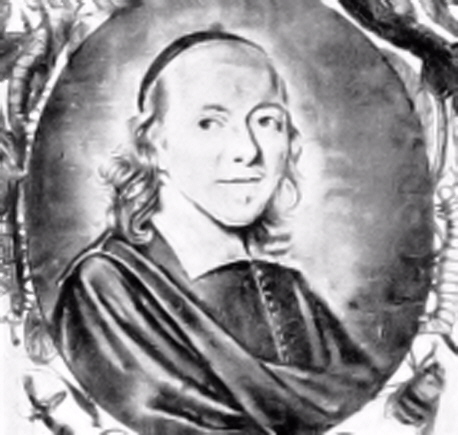
by J. Goedart (1662) <PHOTO>. He described "small flies"
emerging from butterfly pupae. Antoni
van Leeuwenhoek in 1700 (van Leeuwenhoek 1702) described the phenomenon of
parasitoidism in insects. He drew a
female parasitoid laying eggs in aphid hosts. Vallesnieri (1706) <PHOTO> first
correctly interpreted this host-parasitoid association and probably became
the first to report the existence of parasitoids. Bodenheimer (1931), however, noted that several earlier
entomologists recognized the essence of parasitoidism. Cestoni (1706) reported other parasitoids
from eggs of cruciferous insects. He
called aphids, "cabbage sheep," and their parasitoids, "wolf
mosquitoes." Erasmus Darwin
(1800) discussed the useful role of parasitoids and predators in regulating
insect pests. During
the remainder of the 18th Century an ever increasing number of references to
entomophagous and entomogenous organisms appeared in the literature, largely
in the form of papers dealing with parasitoid biologies. Diseases of silkworms were recognized
early in the 18th Century. De Reamur
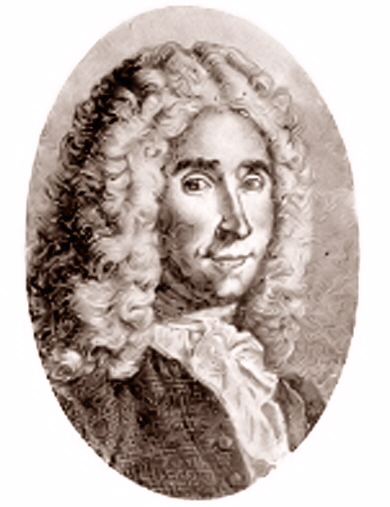
(1726) <PHOTO> described
and illustrated Cordyceps
fungus infecting a noctuid larva. Biological
Control Efforts in the 18th Century By 1762
the first successful importation of an organism from one country to another
for biological control took place with the introduction of the mynah bird
from India to the island of Mauritius, for locust control. Further
development of modern biological control awaited the recognition of the fact
that insect pest problems were population phenomena. The controversial publications of Malthus
appeared toward the end of the 18th Century, and generated considerable
interest in the subject of populations.
Malthus' work will be discussed further in the next section on
"Concepts in Population Ecology." Biological Control Efforts in the Early 19th
Century A number
of articles appeared during the first half of the 19th Century that lauded
the beneficial effects of entomophagous insects. Erasmus Darwin (1800) recommended
protecting and encouraging syrphid flies and ichneumonid wasps because they
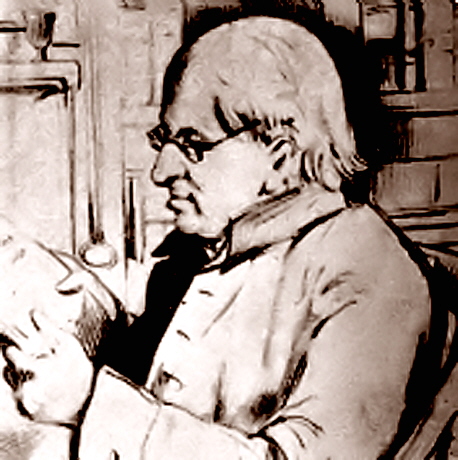
destroyed considerable numbers of cabbage-feeding caterpillars. Kirby & Spence (1815) [see <PHOTO>] showed that
predaceous coccinellids controlled aphids.
Hartig (1827) recommended the construction of large
rearing cages for parasitized caterpillars, with the ultimate aim of mass
release. Ratzeberg
(ca. 1828) <PHOTO> called particular attention to the value of parasitic
insects with publication of a large volume on the parasitoids of forest
insects in Germany. He did not
believe that parasitic control could be augmented by humans. Agustino Bassi (1834)
first demonstrated that a microorganism, Beauvaria
bassiana, caused an animal
disease, namely the muscardine disease of
silkworms. Kollär
<PHOTO> (1837)
writing an article for farmers, foresters and gardeners, pointed out the
importance of entomophagous insects in nature's economy; studied parasitoid
biologies and was the first to report the existence of egg parasitoids. Boisgiraud (1843)
reported that he used the predaceous carabid beetle, Calasoma sycophanta,
to successfully control gypsy moth larvae on poplars growing near his home in
rural France. He also reported that
he had destroyed earwigs in his garden by introducing predaceous staphylinid
beetles. Biological Control in the Late 19th
Century Beginning
in 1850, events associated with the westward expansion of agriculture in the
United States paved the way for the further development of the field of
biological control. During and
following the "Gold Rush" in California, agriculture expanded
tremendously in California especially.
At first the new and expanded plantings escaped the ravages of
arthropod pests. Predictably,
however, crops soon began to suffer from destructive arthropod
outbreaks. Many of these pests were
found to be of foreign origin, and were observed to be far more destructive
in the newly colonized areas than in their native countries. Consequently, the notion grew that perhaps
these pests had escaped from some regulatory factor or factors during their
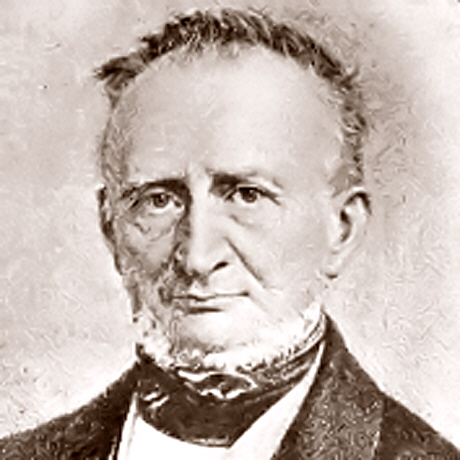
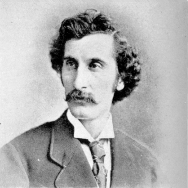
accidental introduction into America. Asa Fitch <PHOTO> (1855) was the
State Entomologist of New York who is recorded as the first entomologist to
seriously consider the transfer of beneficial insects from one country to
another for the control of an agricultural pest. Fitch suggested that the European parasitoids of the wheat
midge, Sitydiplosis mesellana, be sent into the
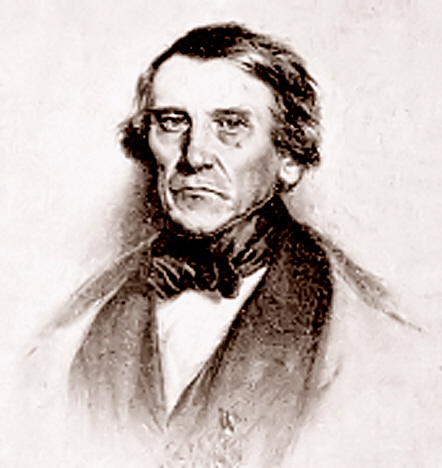
eastern United States. Benjamin Walsh <PHOTO> supported
Fitch's suggestion and in 1866 he became the first worker in the United
States to suggest that insects be employed in weed control. He proposed that insects feeding on toad
flax, Linaria vulgaris, be imported from
Europe to control invaded yellow toad flax plants. The first actual case of biological control of weeds was,
nevertheless, in Asia, where around 1865 the cochineal insect Dactylopius ceylonicus was introduced from
southern India into Ceylon for prickly pear cactus control (Opuntia vulgaris).
Originally Dactylopius
had been imported to India from Argentina in 1795, in the mistaken belief
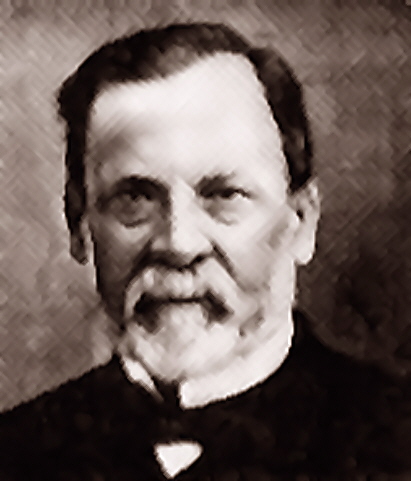
that it was the cochineal insect of commerce, D. cacti. Louis Pasteur (1865-70) <PHOTO> studied
silkworm diseases and saved the silk industry in France from ruin [not really
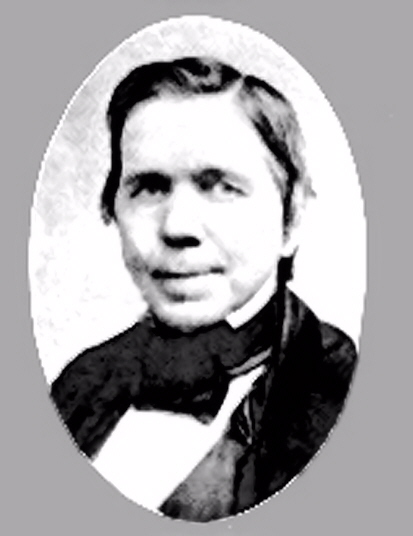
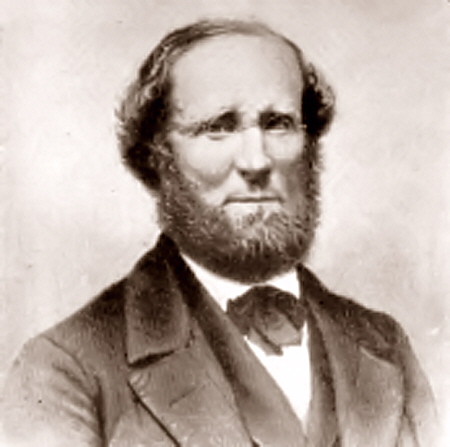
biological control]. Charles Valentine Riley <PHOTO> (1870) has
been named the father of modern biological control. He shipped parasitoids of the plum curculio from Kirkwood,
Missouri to other parts of that state.
In 1873 he became the first person to successfully transfer a predator
from one country to another with the shipment of the American predatory mite,
Tyroglyphus phylloxerae to France for use
against the destructive grapevine phylloxera. The results were not particularly successful, however. In 1883, Riley directed the first
successful intercontinental transfer of an insect parasitoid, Apanteles glomeratus, from England to the United States for control
of the imported cabbageworm. He was
Chief Entomologist of the U. S. Department of Agriculture. In 1872, 11 years before the importation
of A. glomeratus, Riley began his interest in the
cottony-cushion scale, Icerya
purchasi, which was
considered the most important citrus pest in California. He correctly located its point of origin
in Australia. [Doutt's account of
this biological control program on p. 31-38 of the DeBach (1964) text is
particularly colorful. Read this,
paying particular attention to the following: a. the roles played by Riley, Albert Koebele
and D. W. Coquillet. b. note the species of insects involved (the
vedalia beetle, Rodolia cardinalis, and the dipterous parasitoid,
Cryptochaetum iceryae), their source, numbers
imported, and their activities relative to the cottony-cushion scale. c. note the method of colonization, and be
able to describe the spectacular results of these introductions, which changed
the status of the pest to an insect of no economic importance in only four
years time. The
successful biological control effort against the cottony-cushion scale
spirited many biological control attempts in many countries, resulting in over
200 biological control successes (see Chapter 24 of the DeBach (1964) text
and other hand-outs). The
cottony-cushion scale success admittedly harmed overall pest control in
California for quite some time because growers thought that the vedalia
beetle would also control other insect pests. Consequently, they neglected other mechanical and chemical
control methods. George Compere (1899) became the first state
employee specifically hired for biological control work. He worked as a foreign collector until
1910, during which time he sent many shipments of beneficial insects to
California from many parts of the world.
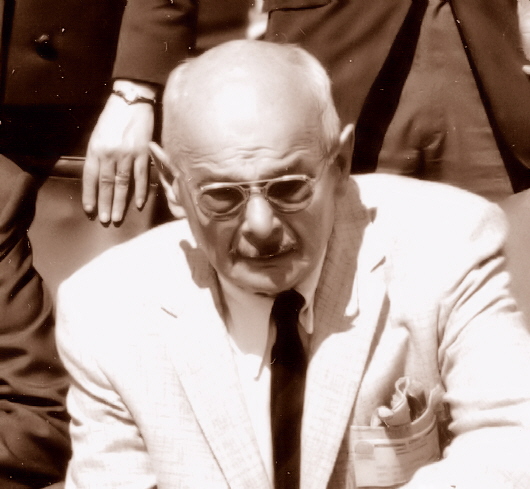
Harold Compere <PHOTO>, his son,
also devoted his entire career to the search for and identification of
natural enemies of scale insects. Harry Scott Smith (1913) <PHOTO> was appointed superintendent of the State Insectary
in Sacramento. In 1923, biological
control work was transferred to the Citrus Experiment Station and Graduate
School of Subtropical Agriculture of the University of California,
Riverside. Biological control work at
Riverside was first conducted in the Division of Beneficial Insect
Investigations, and was changed to the Division of Biological Control with
Smith as chairman in 1947. Personnel
were stationed at Albany and Riverside.
Under Smith, importation of Chrysolina
beetles from Australia for Klamath weed control marked the beginning of
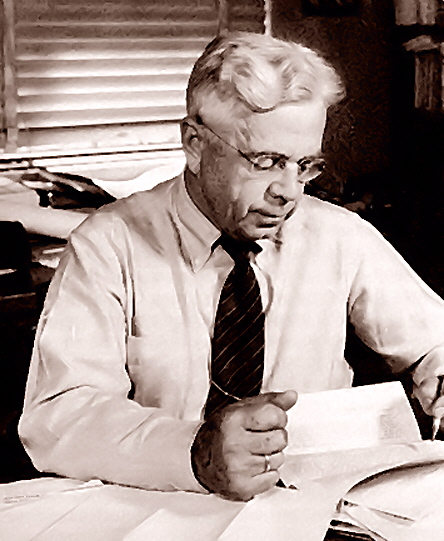
biological weed control in California in 1944. Edward Steinhaus (1947) <PHOTO> established the first laboratory and curriculum in
insect pathology at the University of California, Berkeley. Later he transferred to the newly opened
Irvine campus of the University and attempted to further insect pathology
there. His untimely death in 1968
precluded this goal. The
Division of Biological Control became the Department of Biological Control at
UC Riverside and Berkeley in 1954. In
1969 Biological Control was dropped as a department, becoming a Division of
Biological Control within the Department of Entomology, against the wishes of
the entire biological control faculty, numbering over 24 academics at
Riverside and Berkeley at that time.
The Berkeley faculty created their own separate Division of Biological
Control with guaranteed privileges and minimum control by the Department of
Entomology. At Riverside the Division
of Biological Control gradually became dominated by chemical control oriented
faculty in the Department of Entomology.
In 1989 the Division was abolished, against the wishes of 85% of the
faculty in the Division. Ignorance
and pecuniary control among the ranks of University of California bureaucrats
is believed to be the principal cause.
Although the dissenting faculty in the Division each wrote a personal
plea to the then Chancellor Rosemary S. J. Schraer to discuss the matter, in
not one case was a reply received. Historical Summary Dr. Joop
C. van Lenteren (personal communication) has provided the following summary
of the history of biological control:
Prerequisites for a scientific approach to biological control were the
general acceptance that insects do not arise by spontaneous generation (F.
Redi in 1668) <PHOTO>, the correct
interpretation of behavior and development of predators (circa 400 BC in
China) parasitic insects (van Leeuwenhoek in 1700) and pathogens, and
evolution of the idea to use natural enemies in the control of pests. In Europe, R. Réaumur (in 1734) <PHOTO>, is thought
to be the first to propose this tactic:
he advised the release of lacewings in greenhouses for the control of
aphids. Early
farmers might have already observed and appreciated the action of predators,
as predation is obvious and easy to understand. Biological control was first applied before its definition when
humans began keeping cats to protect stored grain from rodents, which is
actually the earliest recorded history of biological control (Egyptian
records date to 2,000 BC). The first
biological control project was that of Chinese citrus growers using Oecophylla smaragdina for the control
of lepidopteran and coleopteran pests in 324 BC. The ants build nests in trees and such nests were collected
and sold to farmers. In order to aid
the foraging of ants, bamboo bridges were built between the citrus
trees. DeBach (1974) observed this
practice still being used in North Burma in the 1950s which was in continued
use in China. All early efforts
employed general predators such as the mongoose, owls and other birds, toads,
ants, etc. Linnaeus was among the first in modern times to
suggest the use of predators for pest control. By 1762 the first successful importation of an organism from
one country to another for biological control took place in 1770 with the
introduction of the mynah bird from India to the island of Mauritius for
control of the red locust Nomadacris
septemfasciata. Insect
parasitism was not recognized until the turn of the 17th Century. The Italian U. Aldrovandi
(1602) first published an observation on insect parasitism. He observed the cocoons of Apanteles glomeratus being attached to larvae of Pieris brassicae. He
incorrectly thought that the cocoons were insect eggs, as he stated,
"Twice have I also observed the cabbage caterpillar laying yellow eggs
covered with delicate wool, and afterwards transforming itself into a
yellowish pupa, marked with green and black.
What appeared peculiar to me was that from these eggs emerged small
winged animalcules, so small that they could barely be seen..." Many
other parasitoids were drawn by the Dutch, Johannes Goedaert
(1662) <PHOTO> in his book Metamorphosis et Historia Naturalis
Insectorum. However, in the text he only once referred
to parasites, "Out of one caterpillar, which had pupated on June 12,
emerged on the 30th the butterfly species.... But out of another caterpillar of the same species, which had
pupated on July 13, emerged after pupation 82 small flies, as the reader can
see in the figure added. Thus from
one caterpillar a butterfly emerged and from the other 82 small
flies." The
British physician Martin Lister suggested in letters
published in the 1670-71 issue of the Philosophical Transactions of the Royal
Society of London, that some insects lay their eggs in the bodies of living
caterpillars and in 1685 he correctly interpreted Goedaert's observations,
"The 82 flies that emerged from the pupa are the progeny of an ichneumon
fly, which had gotten into the caterpillar in a manner that is still not
entirely clear to me. In all
likelihood they were laid right there by the mother fly..." Another 25 years is required before the
cycle of parasitism was fully analyzed and described. The Dutch
microscopist Antoni van Leeuwenhoek in a letter of 26
October 1700 to the Royal Society, published in their Philosophical
Transactions in 1701, fully unravelled insect parasitism and his original
text is used to illustrate this discovery.
In the spring of 1700 he observed that some of the berry trees in his
garden in Delft had more flowers than usual.
He also observed that the "black flies" on these trees were
more numerous than in other years. He
was afraid that the offspring of so many blackflies would completely
devastate his berry trees. After
studying the mouthparts of the "blackflies" he concluded that they
would not be able to eat the leaves, "These last flies that I caught
were all females, and had their eggs in them; from whence I more strongly
concluded that the black flies did the trees no harm; for if they had laid
their eggs on the trees, and that all their eggs had produced so many living
insects, there would not, I am positive, be one leaf or any fruit remaining
on the trees." Leeuwenhoek
strongly denied the theory of spontaneous generation, a hotly debated topic
during his time. He continued with,
"I shifted these flies into another glass tube, where I had before put
six green lice [aphids], which I had taken from the leaf of a
currant-tree... These flies, as soon
as ever they came near the said lice, brought the hinder part of their body,
which was pretty long, between all their feet, and stretched their body far out,
and their tail making a kind of semicircle with the rest of the body, stood
out beyond their head, and in this manner they insinuated their tail into the
bodies of the worms, and this the flies did in a short time to all the worms
they came near to; but that which was most remarkable in this action was that
in this conjunction they never touched the lice, either with their feet or
bodies, so that they often essa'd to approach the creatures, in order to
thrust in their tails into their bodies, and could not effect it; nay, one
would say they were so afraid of these lice as if they would have devoured
them; and as they entered the bodies of the lice they made a trillende
[shivering] motion of shaking with their tail, which came to be done so that
they might thrust it in further."
"Now, as the flies remained but two days alive without
copulation, as ever I observed, whereas the green lice lived seven or eight
days, I though not otherwise but that the flies by that insinuation of their
tails into the bodies of those lice, did withal convey their eggs in the same
time, and that from those eggs young worms should have been produced, which
having received their nourishment and increase from the bodies of the lice,
should be changed again into a fly, but the green lice died, and for the most
part dried away. Not content with
this observation I got together again 25 dead lice, all of which in their
bellies a worm, or else a fly newly changed, for I saw through the skin of
some of the lice, living flies, which flies I took out alive from the bodies
of some of those green lice which I opened on purpose... Now if we observe the wonderful formation
of such a small creature, and how such a fly is produced, and then consider
that the worm which is changed into the fly, and we imagine that such a thing
will not happen, unless the worm that comes out of the egg of the fly makes
use of another creature for its food, we must remain perfectly amazed." From this
description it can be concluded that what van Leeuwenhoek very exactly
described was the parasitization behavior of an aphid parasite. The illustration which was published with
the letter is of such good quality that the insect could easily be determined
to be Aphidius ribis Haliday, a parasite of
the aphid Cryptomyzus ribis (L.). Thereafter in the 18th Century, knowledge
of parasitoids rapidly increased. Silkworm diseases were recognized as early as
the 18th Century, although diseases of bees were known to the Greeks and
Romans. Many publications in the
16th, 17th and 18th Centuries dealt with diseases of silkworms, silk being a
very important industry at the time.
Vallisnieri was the first to mention the muscardine disease of
silkworm. De Reamur
(1726) described and was the first to illustrate a fungus, Cordyceps, infecting a noctuid
larva. The microbial naturel of these
diseases was not yet realized. From
William Kirby's <PHOTO> chapter on
"Diseases of Insects" (Vol. 4, 1826) of An Introduction to
Entomology (Kirby & Spence 1815) we learn that it was recognized that
true fungi grew in the bodies of insects as saprophytes and possibly as
parasites. Agustino Bassi (1837)
first experimentally demonstrated that a microorganism, Beauveria bassiana
caused an animal disease, namely the muscardine disease of silkworms. It was also Bassi who suggested in
publication in 1836 that microorganisms be used for insect pest control. Later in 1874, Louis Pasteur <PHOTO> suggested
the use of microorganisms against the grape phylloxera in France. These suggestions did not result in
practical application. Elie
Metchnikoff tried to develop biological control for the wheat cockchafer, Anisopilia austriaca, a serious pest of cereal crops in the area of
Odessa, Russia. In 1879 he published
a paper on Metarrhizium anisopliae, and his experiments
led to the conclusion that the fungus, when mass produced and properly
introduced in the field, might result in effective control. Based on Metchnikoff's work, Metarrhizium was mass produced
in 1884 in the Ukraine, and the spores were tested in the field against a
curculionid, Cleonus punctiventris, in sugar beets.
Biological weed control did not start until after 1850. The American Asa Fitch <PHOTO> was the
first to suggest biological control of weeds around 1855, when he observed
that a European weed in New York pastures had no American insects feeding on
it. He suggested that importation of
European insects feeding on this weed might solve the problem. The first practical attempt dates from
1863, when Dactylopius
ceylonicus, was
distributed for cactus control in southern India after they had been observed
to decimate cultivated plantings of the prickly pear cactus, Opuntia
vulgaris, in northern
India (Goeden 1978). In 1865, the
first successful international importation for weed control took place, when
this same insect was transferred from India to Sri Lanka, where in a few
years widespread populations of the same cactus, O. vulgaris,
was effectively controlled. During
the 19th Century taxonomy rapidly developed and many biological studies of
natural enemies were made. Practical
ideas and tests about application of biological control gradually
advanced. Erasmus Darwin, the
grandfather of Charles Darwin, published Phytologia, a book on agriculture and gardening in
1800, in it stressing the role of natural enemies in reducing pests. Moreover, he suggested that aphids in
hothouses by controlled by artificial use of predaceous syrphid fly
larvae. Augmentation of ladybird
beetles for control of hop aphids in the field and aphids in greenhouses was
also suggested by Kirby & Spence (1815). By 1850
biological control obtained full attention in the United States, where
imported pests were taking a large toll of both domestic imported crops. Entomologists, such as Asa Fitch, C. V.
Riley <PHOTO> and Benjamin
D. Walsh <PHOTO>, suggested the importation of natural enemies from
their homeland. It was C. V. Riley
who organized the first intra-state parasitoid transport when he sent
parasitoids of the plum curculio, Conotrachelus nenuphar, to different
localities in Missouri [probably a wasted effort]. Riley was also the first to propose conservation of parasitoids
of the rascal leafcrumpler of fruit trees, Acrobasis indigenella, by collecting larvae in their cases in
mid-winter and then placing them away from the tree far enough that the
larvae could not reach the trees anymore, but the parasitoids emerging from
parasitized individuals in springtime could easily do so. Also, in 1873, Riley stimulated the first
international transfer of an arthropod predator by sending the predatory mite
Tyroglyphus
phylloxerae to France
for control of the grape phylloxera, Daktulosphaira vitifolii. It established but did not result in
effective control. The first
international shipment of a predatory insect took place in 1874, when aphid
predators, among which Coccinella
undecimpunctata, were
shipped from England to New Zealand and became established. The first international transfer of
parasitic insects was Trichogramma
from the United States to Canada in 1882.
The first intercontinental parasitoid shipment took place in 1883,
when Riley organized the shipment of Apanteles glomeratus from England to the
United States for control of cabbage white butterflies. It was just another six years before the
spectacular success with Rodolia
took place, again under the direction of Riley. Other texts and files in this series may be viewed by CLICKING on the following: Secrets of Science <museum1.htm> History of Biological
Control <museum2.htm> Introduction and Scope of
Biological Control <museum3.htm> National and International
Organizations Active in Biological Control
<museum4.htm> Economic Gains and Analysis of
Successes in Biological Control <museum5.htm> Trends and Future Possibilities
in Biological Control <museum6.htm> Beneficial Insects <museum7.htm> Case Histories of Salient
Biological Control Projects <detailed,htm> Guide to Identifying Predatory
and Parasitic Insects
<NEGUIDE.1>, <NEGUIDE.2>... etc. Insect Natural Enemy Photos
<NE-2ba.PCX>, <NE-2bb.PCX>... <NE-247ba.PCX>... etc. Meal Worm Project <project.3.htm> Ladybird Beetles <ladybird.htm> Fruit Flies in California <fruitfly.htm> Killer Bees <killer.htm> Monarch &
Viceroy Butterflies <31aug95.mus.htm> Everywhere is
Home <9feb98.mus.htm> Familiar Butterflies of the
United States & Canada <butterfl.htm> References: Please refer to <biology.ref.htm>, [Additional references
may be found at: MELVYL
Library] Bassi, A.
1935. Del mal del segno,
calcinaccio o moscardino, mallatia che affigge i bachi da seta e sul modo di
liberarne le bigattaie anche le piu infestate. Part I: Theoria.
Orcesi, Lodi. p. 1-9, 1-67. Bodenheimer, F. S.
1931. Der Massenwechsel in der
Tierwelt. Grundriss einer allgemeinen
tierischen Bevölkerungslehre. Arch. Zool. Ital. (Napoli) 16: 98-111. Compere, G. 1902.
Entomologist's Report.
Introduction of Parasites. West. Austral.
Dept. Agric. J.
6: 237-40. Compere, G. 1904.
Black scale parasite (Scutellista
cyanea). West Austral. Dept. Agric. J. 10: 94. Compere, G. 1921.
Seasonal history of black scale and relation to biological
control. Calif. Citrog. 6: 197. Darwin, E. 1800.
Phytologia. Publ., London. Doutt, R.
L. 1964. The historical Development of biological control. In: P. DeBach (ed.), Biological Control of
Insect Pests and Weeds. Reinhold
Publ. Corp., New York. 844 p. Fitch, Asa. 1954.
Sixth, seventh, eighth and ninth reports on the noxious, beneficial
and other insects of the state of New York.
Albany, New York. 259 p. Goedaert, J.
1662. Metamorphosis et
Historia Naturalis Insectorum. Jacques Fierens, Middelburgh. Kirby, W. &
W. Spence. 1815. An Introduction to Entomology. Longman, Brown, Green & Longmans,
London. 285 p. Kollär,
Vincent. 1837. In: London's Gardner's Magazine. 1840. [English translation]. Malthus, T.
R. 1803. An Essay on the Principle of Population as It Affects the
Future Improvement of Society. J.
Johnson, London, 2nd ed. 610 p. Pasteur, L. 1870 Etudes dur la maladie des vers a
soie. Gautherie-Villars,
Paris, I: 322 p.; II: 327 p. Ratzeburg, J. T. C.
1944a. Die Ichneumonen der
Forstinsekten in forstlicher und entomologischer Beziehung; ein Anhang zur
Abbildung und Beschreibung der Forstinsekten. Theile, Berlin. 3 vol. Ratzeburg, J. T. C.
1944b. Die Ichneumonen der
Forstinsekten, Vol. I. Berlin. Réaumur, M. de.
1726. Remarques sur la plante
appellée a la Chine Hia Tsao Tom Tchom, ou plante ver. Mem.
Acad. Roy. Sci. (21 Aug 1726). p.
302-5. Riley, C.
V. 1893. Parasitic and predaceous insects in applied entomology. Insect Life 6: 130-41. Riley, W.
A. 1931. Erasmus Darwin and the biologic control of insects. Science 73: 475-6. Smith, H.
S. 1916. An attempt to redefine the host relationships exhibited by
entomophagous insects. J. Econ. Ent.
9: 477-86. Smith, H.
S. 1919. On some phases of insect control by the biological method. J. Econ. Ent. 12: 288-92. Smith, H.
S. 1929. The utilization of entomophagous insects in the control of
citrus pests. Trans. 4th Internatl. Congr. Ent.
2: 191-8. Steinhaus, E. A.
1946. Insect Microbiology. Comstock Publ. Co., Inc., Ithaca, New
York. 763 p. Steinhaus, E. A.
1949. Principles of Insect Pathology. McGraw-Hill Book Co., Inc., New York. 757 p. van Leeuwenhoek, A.
1702. Letter in Nr. 266 of the Philosophical
Transaction 1700-1701, Vol. 22, p. 659-72.
Smith & Walford, London. van Lenteren, J. C.
1983. Biological pest control: passing fashion or here to stay? Organorama (Netherlands) 20: 1-9. Walsh, B. D.
1866. Practical
Entomologist. June 1866. p. 101. |